
From Army Boots to Hard Hats: How Two Veterans Built L5 Legacy Capital
L5 Legacy Capital was built one project at a time by Byron Kizzie and Dr. Melynda Kizzie, two U.S. Army veterans who met in uniform and started with hammers in their own hands. A home in Hawaii, a rental community in Virginia and workforce housing in Northeast Louisiana led to the firm they opened to investors in 2026, from Frisco, Texas.
Most sponsors start with a pitch deck. We started with sheetrock dust in our hair and a budget we couldn't afford to miss. This is how two soldiers learned to build, and why we'd like you beside us for what we build next.
A private conversation with Byron Kizzie, our Managing Partner. No pitch. No pressure.
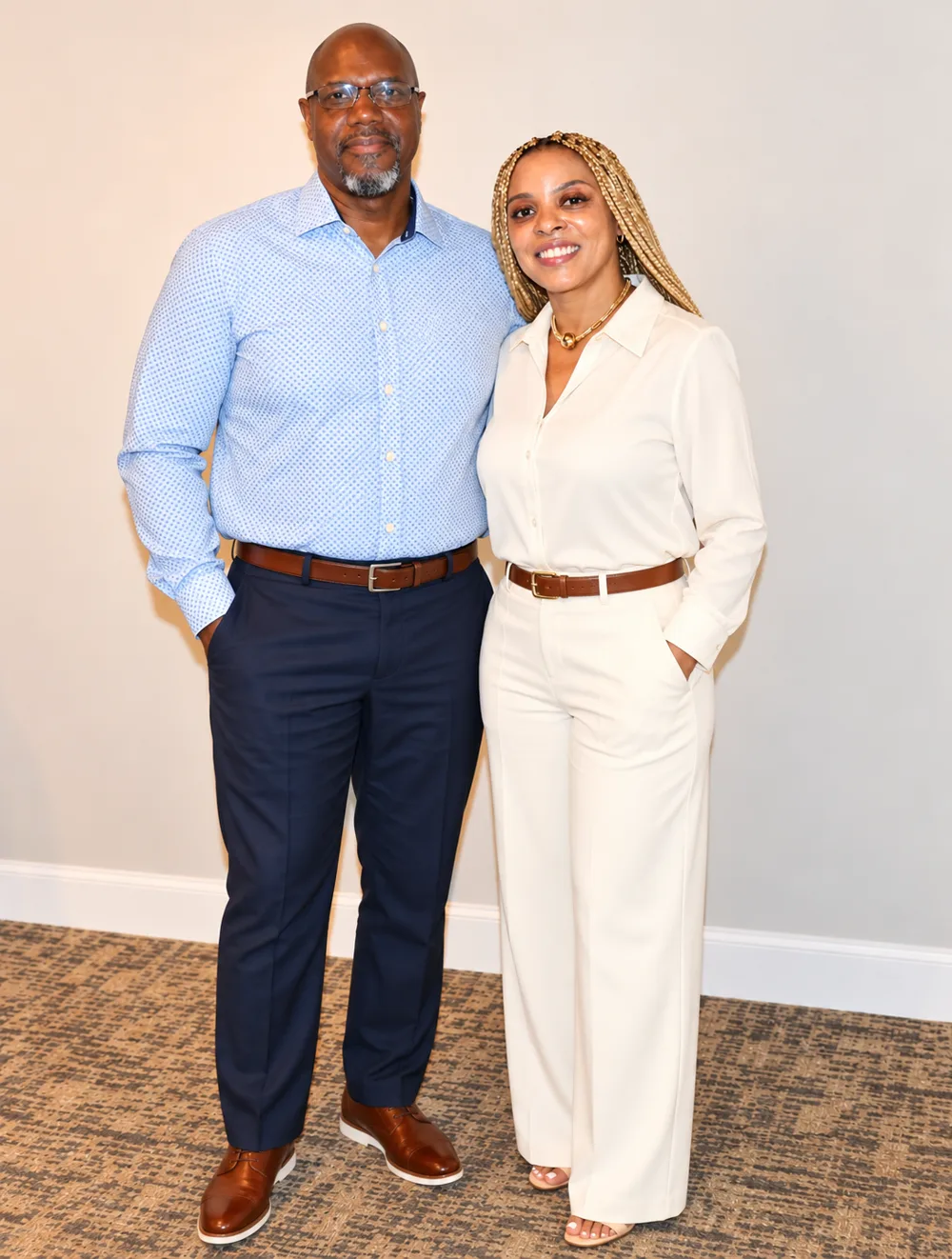
Image: Byron and Melynda Kizzie in hard hats on an L5 job site
Where did the L5 story begin?
It began in the U.S. Army. We met while serving, and the habits the Army gave us became the way L5 runs today.
Byron is a 20-year U.S. Army veteran. Melynda joined for adventure, discipline and purpose. Our military careers looked nothing alike. The Army still taught us the same things: plan the mission, prepare for what can go wrong, take care of the people beside you, and finish what you start.
“You don't charge a hill without recon. I don't buy a building without it.”
Real estate was in the family before it was in the business. Both of our fathers owned real estate. From the time we were dating, we talked about building something in real estate together. We just didn't know yet where it would start, or what it would cost us to learn.
How did two soldiers get into real estate?
With a home in Hawaii. As a military family stationed there, we built our first home for less than $320,000, and it changed how we saw money, family and the future.
For a military family, that was a serious bet with our own money, and there was no one to hand it off to. Byron grew up in Virginia, where $100,000 was a lot of money for a house. He wasn't sure. Melynda was. The day we broke ground, it started to rain, and it rained for 40 days straight. Construction stopped. Our rate lock ran out and had to be extended, then extended again. We kept going.
Eight years later, instead of selling it, we converted that first home into a rental and built a slightly larger second home for less than $580,000. Now we were living real estate from both sides: as developers creating new value and as owners earning income. We had about two weeks to find a tenant, because we needed the rent to qualify for the second mortgage. We found one. From then on, the first house paid most of the mortgage on the second, and every dollar it saved us went into the next project.
When it was time to leave Hawaii, we debated for months whether to keep both homes and manage them from the mainland. We sold. Both properties sold and closed within 60 days, generating more than $400,000 in combined profit. We signed the closing documents in the lobby of a temporary apartment in Texas, before we had even unpacked.
“The most valuable thing we gained wasn't simply the profit. It was the realization that real estate could be a vehicle for building long-term wealth.”
“That first home wasn't just a property. It was the beginning of the vision.”
Hawaii taught us the principles we still invest by: buy or build with discipline, understand the value you can create, operate with a long-term perspective, and know when the market presents the right moment to exit.
Identify opportunity. Create value. Generate income. Build equity. Exit strategically. Reinvest.
That was the turning point. We were bit by the real estate bug, and we never looked back.
The Hawaii homes were our family's own homes, not an L5 investment or an investor result. One project's results do not predict the results of any other project. Target returns are not guaranteed. All investments involve risk, including possible loss of principal.
Could the model work at community scale?
Yes, and Virginia proved it. We acquired 25 acres in a high-potential Virginia market to build a purpose-built rental community, and renters were lining up before the first homes were finished.
We didn't build everything at once. Twenty-five acres is a lot of ground to be wrong on. So we ran recon first: three homes to test our research, standing alone on open land. Before construction was even complete, renters were asking to be put on a list. We had a waiting list before we had a finished house.
Byron still calls the way we built there Monopoly. We bought one house, then the one beside it, then the one behind it, until we owned the corner. One we rehabbed with our own hands. One was too far gone, so we tore it down and built new. One we bought at a tax-sale auction, with our team on the ground bidding for us, then tore down and rebuilt. Every one was built to rent, brand new, because we made a promise early: affordable rentals people would be proud to live in. Over the years, we have sold rentals to the very families renting them.
Strong relationships with the local community and the municipality showed us the growth coming to the area. That knowledge gave us the confidence to set rents significantly above the market's historical levels, and demand stayed strong. We completed the community. Demand there remains strong today.
Virginia gave us a second playbook, one we still run on every deal:
Network. Underwrite. Analyze. Build. Create Value.
What it means for you: we test before we scale. Your capital never funds a hunch.
What did hard hats and hammers teach us?
That nobody hands you anything, and that a budget only means something when you know what the work costs.
We had more determination than money. So we worked in the business and on the business at the same time.
Picture a bathroom stripped to the studs, the floor torn out, and the two of us in hard hats doing the math on whether the budget would survive the next surprise. That was our classroom. We tore out bathrooms, floors and sheetrock ourselves. We learned from friends in the trades, from mentors, from more YouTube videos than we can count, and from every project that taught us something the hard way. (For the record: HGTV and YouTube will fool you. Nothing is as quick as it looks.)
“We came in at the ground level. We both had on hard hats, hammers in our hands, building houses.”
An early mentor gave Byron a rule he has never let go of: treat their money like our money. It became the first rule of L5.
Then the cycle turned. We built through the 2006 boom, when everything seemed to sell, and we kept building through the 2008 downturn, when plenty of builders stopped. That was the test. It taught us the lessons we still repeat: buy with discipline, plan for the down cycle first, and never let a hot market make the decision for you.
What it means for you: when we read a renovation budget or a construction schedule, we know what the work actually takes. Optimistic numbers don't get past people who have hung the drywall themselves.
What has the L5 team delivered for investors?
A $2.25 million workforce housing development in Northeast Louisiana, where investors realized a 1.5x equity multiple: $1.50 back for every $1.00 invested, in under 15 months.
Working families in Northeast Louisiana needed quality homes they could afford to buy, and most developers walked past the market. We went in to talk about a commercial project. The mayor told us what the town needed most: single-family homes.
A local mentor who had watched our work made the land available. We held a town hall so the community heard our plans from us first. We pre-qualified buyers before we broke ground, so we knew the homes would sell before we built them. We partnered with local lenders on closing-cost assistance, favorable financing and mortgage programs designed for workforce families.
The homes sold. Working families most developers had walked past picked up the keys to homes of their own. Families moved in. And investors realized 1.5x, $1.50 for every $1.00, in under 15 months, paid out before the last lots even sold. A second phase is still to come.
That is Hawaii's discipline and Virginia's recon, applied with investors beside us. Read the Northeast Louisiana case study →
One project's results do not predict the results of any other project. Target returns are not guaranteed. All investments involve risk, including possible loss of principal.
How big has the work become?
Big enough to prove the model at every scale. We have delivered residential communities exceeding $4 million and commercial and hospitality projects exceeding $5 million, and Byron has overseen more than $6 million in property acquisitions.
Byron built a specialty in hospitality and public-private partnerships. That experience shapes L5's strategy today: acquire overlooked and underperforming properties in growth corridors, reposition them, run them better and grow net operating income, rather than waiting on market luck. See how we create value →
The work changed as it grew. Today we're not swinging the hammer. We're on site, managing construction, working with municipalities on zoning and approvals, and bringing in the experts who make each project come to life. When a project hits a hurdle, we don't hand it off.
“Let's go back in the foxhole and figure out how to solve this problem, so we can get this project over the finish line on time, because we have other people's money depending on it.”
Why did we open L5 Legacy Capital in 2026?
Because one family can only build so much on its own, and we were tired of saying no to people who wanted in.
A friend and mentor told us the next step was a commercial real estate fund. Friends kept asking how they could do what we'd done. Our honest answer surprised them: if we had to do it all over again, we'd skip the residential grind and get into a fund like this one.
“No tenants and no toilets.”
“We don't want to deploy all our own money and give no one else the opportunity to have the same financial freedom.”
A $25 million project is out of reach for most families. Forty or fifty people who pool their capital behind disciplined operators can own it together. So in 2026, after more than 15 years of building, we opened L5 Legacy Capital to investors. The firm is new. The builders aren't.
The partnership has a clean split. She finds the deal. He makes sure it closes. Melynda leads the front end: finding and screening opportunities. Byron leads underwriting, bank relationships, how each equity raise is structured, and the exit.
“I'll let you lead in your strength and you let me lead in mine, which makes us a very powerful team.”
Where is L5 Legacy Capital today?
Today L5 Legacy Capital invests in commercial real estate across Texas and Louisiana through the L5 fund, a $15 million fund open now to verified accredited investors. We're based in Frisco, Texas, in the Dallas–Fort Worth area.
The fund's current project is a shovel-ready, brand-committed boutique hotel in a growing Northeast Louisiana corridor with few upscale rooms. We share its location and brand privately in the investor briefing. Behind it, we're working to place a self-storage facility in Huntsville, Texas, in the fund, and we're evaluating another in Longview, Texas. We publish every project we place in the fund, so you can see where the capital goes.
Some things haven't changed since Hawaii:
- Our money goes in first. We put our own capital into the fund before we bring in a single investor.
- You get paid first. The fund's offering documents give limited partners a preferred return, paid before the general partners share in profits.
- We still say no far more than yes. We review about 100 deals to choose the two to five that work.
The L5 fund is $15 million, and every first investor conversation is with Byron personally. Explore current opportunities and access the materials you need to take the next step.
What keeps us grounded?
Our faith in Jesus Christ. It is the center of our marriage, our family and the way we run this business.
We do real estate together, life together and ministry together. We make every major decision, from where we live to which deal we sign, with wisdom, faith and purpose. Before we commit to a place, we walk it, the way Israel walked Jericho. We pray over it and make sure it's where we're supposed to build. Ministry isn't a side project for us. It's the same partnership pointed at people instead of property.
“We're the Priscilla and the Aquila of real estate. Our tents look like commercial and single-family properties.”
Priscilla and Aquila were the husband-and-wife tentmakers of the New Testament who worked side by side and served side by side. That's the picture we hold ourselves to: a trade done with excellence, and a life of service built around it.
We're raising three children, and we want to hand them what our fathers handed us, and more: a way of working, serving and building that lasts. Melynda also founded P31 Keys (p31hub.com), a separate education company that helps women build wealth through real estate.
Why does our story matter to your money?
Because the way we built L5 is the way we'll handle your capital.
You've met the other kind of sponsor: a polished deck, no scars, nothing of their own on the line. A great deal with the wrong operator is a bad deal. Here is what you get instead.
We've done the work with our own hands.
Our budgets come from job sites, not spreadsheets.
For you: fewer surprises after you invest.
We've built through a boom and a downturn.
2006 and 2008 taught us to plan for the down cycle first.
For you: a plan built for bad markets as well as good ones.
We test before we scale.
Three homes before 25 acres in Virginia. Pre-qualified buyers before we broke ground in Northeast Louisiana.
For you: your capital never funds a guess.
Our money has always been on the line.
It still is, and it goes in before yours.
For you: a partner who feels every decision the way you do.
You worked as hard for your wealth as we worked on those first houses. It deserves partners who treat it that way. The next chapter of this story has a seat open in it, and it starts with one conversation.
A private conversation with Byron Kizzie, our Managing Partner. No pitch. No pressure.
The L5 journey at a glance
| Chapter | Milestone |
|---|---|
| Service | Byron and Melynda meet while serving in the U.S. Army; Byron serves 20 years |
| Hawaii | First home built for less than $320,000; eight years later it becomes a rental and a second home is built; both sell within 60 days for more than $400,000 in combined profit (the founders' own homes) |
| Virginia | 25 acres; three homes first; a waiting list of renters before completion; the community is completed (the founders' own project) |
| Hard hats | Building by hand, through the 2006 boom and the 2008 downturn |
| Northeast Louisiana | Workforce housing, a $2.25 million development; investors realize 1.5x in under 15 months |
| Scale | Residential communities exceeding $4 million; commercial and hospitality projects exceeding $5 million; more than $6 million in acquisitions overseen |
| 2026 | L5 Legacy Capital opens to investors: 15-plus years of building, now with investors beside us |
| Today | The $15 million L5 fund, open to verified accredited investors, investing across Texas and Louisiana |
| Next | Your chapter |
One project's results do not predict the results of any other project. Target returns are not guaranteed. All investments involve risk, including possible loss of principal.
Our story is still being written. We'd like the next chapter to include you.
Tell Byron what you're building toward, and he'll show you exactly how we work, what we're investing in now and whether it fits.
A private conversation with Byron Kizzie, our Managing Partner. No pitch. No pressure.
What happens next:
- (1) a short form
- (2) a confirmation and calendar invite
- (3) your conversation with Byron
- (4) if it's a fit, a private briefing on the L5 fund and its projects, and verification of your accredited status through InvestNext, our investor portal
Not ready to talk yet?
Start smaller. Learn how we think before you decide.
Questions investors ask us
Straight answers about how L5 started and how our history protects your capital.
How did L5 Legacy Capital start?
It started with the founders' own home in Hawaii. Byron Kizzie and Dr. Melynda Kizzie, both U.S. Army veterans, built their first home there as a military family, then a second. They went on to build a 25-acre rental community in Virginia, kept building by hand through the 2006 boom and the 2008 downturn, and in 2026 opened L5 Legacy Capital to investors. Schedule an investor conversation with Byron.
Where did Byron and Melynda Kizzie meet?
They met while serving in the U.S. Army. Byron is a 20-year Army veteran, and the habits the Army gave them both still shape how L5 invests: recon first, take care of the people beside you, finish what you start. Meet the founders.
When was L5 Legacy Capital founded?
In 2026. The firm is new; the builders aren't. Byron and Melynda have been developing and investing in real estate for more than 15 years, through the 2006 boom and the 2008 downturn, and launched L5 to bring investors into the kind of deals they had been doing themselves. Today it runs the $15 million L5 fund for verified accredited investors from Frisco, Texas. See how we invest.
Were the Hawaii and Virginia projects L5 investments?
No. Hawaii and Virginia were the founders' own projects, where they built the playbook L5 runs on today. They are not L5 investor results. The L5 team's documented investor result is the Northeast Louisiana workforce housing case study.
Where is L5 Legacy Capital based?
L5 Legacy Capital is based in Frisco, Texas, in the Dallas–Fort Worth area, and invests across Texas and Louisiana. See Markets.
Why should an investor care how L5 started?
Because founders who built with their own hands underwrite with real numbers. Byron and Melynda know what renovation and construction actually cost, they built through a full market cycle, and their own money goes into the fund first. See the Investment Philosophy.